How public sector organizations are digitizing their hiring process
HR digitalization allows local authorities to modernize their recruitment, automate key tasks, and improve the candidate experience. Discover the challenges and best practices.

By digitalizing HR processes, meaning by integrating digital technologies and tools, local authorities can recruit faster, more efficiently, and offer a better candidate experience. Thanks to tools like ATS or HRIS, public service HR departments gain responsiveness, automate time-consuming tasks, and improve recruitment process transparency.
How can this digital HR transformation be successfully achieved? Challenges, advantages, implementation—JobAffinity explains everything you need to know about HR digitalization in local authorities.
- HR digitalization in local authorities: summary
- What is HR digitalization?
- What are the challenges of digitalizing local authorities?
- What are the advantages of HR digitalization in the public sector?
- What tools serve as levers for HR digitalization?
- How to successfully digitalize HR processes?

HR Digitalization in Local Authorities: Summary
- HR digitalization allows local authorities to recruit more efficiently by automating tasks, simplifying applications, and improving the candidate experience.
- It relies on specific tools such as ATS, HRIS, candidate portals, collaborative HR platforms, and artificial intelligence.
- Local authorities and the public sector must work within specific constraints, such as civil servant status, competitive exams, transparency requirements, and job diversity.
- HR digitalization addresses quality and attractiveness challenges as part of the public sector modernization objective supported by the State and Law No. 2019-828 of August 6, 2019, on public service transformation.
- Solutions like JobAffinity facilitate this transition by offering a complete recruitment tool designed for local authorities and adapted to public service requirements.
What is HR Digitalization?
HR digitalization refers to the integration of digital tools and technologies into HR processes: application management, career tracking, interviews, training, payroll, etc. Concretely, this means replacing certain manual or paper-based tasks, often time-consuming, with digital solutions that automate, simplify, and centralize processes.
Digitalization means rethinking all human resources management with efficient tools such as:
- HRIS (Human Resource Information Systems), which consolidate all HR data in a single platform.
- ATS (Applicant Tracking Systems), which help better manage recruitment, from CV reception to new employee onboarding.
- E-learning tools for remote training, or digitalized onboarding** to welcome new employees with a structured integration pathway.
What Are the Specificities of HR Digitalization in Local Authorities?
In local authorities and the public sector, HR digitalization must incorporate and integrate specificities such as:
- Specific rules: HR management in the public service is based on regulatory texts that govern the rights and obligations of public service employees. Each recruitment, mobility, or career progression must follow precise rules: competitive exams, grade advancements, joint administrative committees, etc.
- Varied job profiles: the public sector encompasses an immense diversity of professions. HR digitalization must adapt to this plurality by offering candidates customizable interfaces and advanced search filters to facilitate application processing.
- Transparency and equality requirements: HR processes in the public sector must guarantee equal treatment of candidates and decision transparency. The challenge here is both ethical and legal.

What Are the Challenges of Digitalizing Local Authorities?
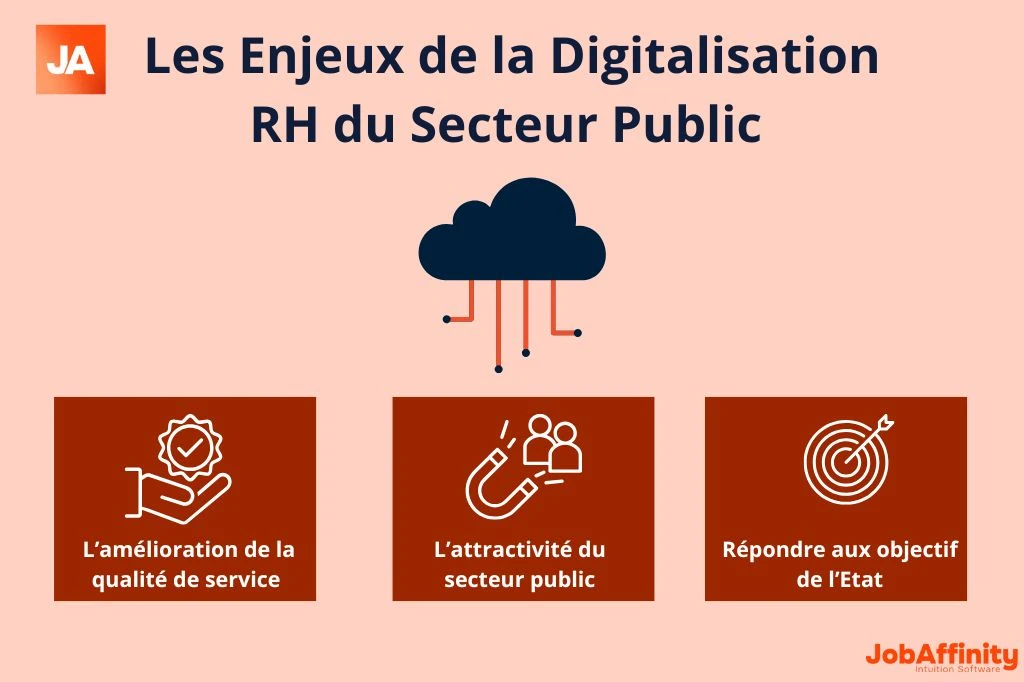
HR digitalization is a lever for modernizing local authorities and the public sector as a whole. It aims to improve service quality, increase efficiency, and strengthen public sector attractiveness, while meeting State objectives.
Improving Service Quality
One priority is to meet public service user needs who want more responsiveness and efficiency, whether for administrative procedures or recruitment. Internal process digitalization will reduce delays and offer a smoother experience.
In public sector recruitment, this means better application tracking, faster responses to applicants, and improved internal request management.
Strengthening Public Sector Attractiveness
According to the France Stratégie report from December 2024, 15% of positions offered in State public service competitive exams were not filled in 2022 (compared to 5% in 2018). These figures warn that the public service seems increasingly less attractive.
However, strengthening attractiveness is possible, notably with more fluid recruitment processes. Indeed, today's candidates expect modern and easily accessible recruitment processes. HR digitalization in local authorities thus helps capture and attract this talent by avoiding overly complex procedures.
Meeting State Objectives
The Law No. 2019-828 of August 6, 2019, on public service transformation aims to modernize human resources management in the public sector by introducing measures that promote agility, mobility, and efficiency, including:
- Expanded use of contractors: administrations can more easily recruit on contract, even for management positions (Article 16),
- Facilitated internal mobility: Article 71 allows CDI (permanent contract) portability between the 3 branches of public service (State, territorial, and hospital),
- Better career management: Article 27 replaces scoring with the annual professional interview as the evaluation method for public employees,
- Improved social dialogue and HR tools: collective bargaining is strengthened and facilitated. Article 4 of the law merges technical committees and health, safety, and working conditions committees into a single body.
In parallel, the State has also implemented mechanisms to support this transition, such as:
- The France Relance plan, which finances modernization projects in public administrations. It notably includes the deployment of the PORTALIS program, which overhauls systems and should facilitate online access to judicial procedures.
- DINUM funds (Interministerial Digital Directorate) intended to support digital initiatives in the public sector. For example, the MesDroitsSociaux.gouv.fr portal allows citizens to consult all their social rights.
- Digital transformation funds for local authorities, which allow public structures to invest in digital tools while benefiting from training and financial support. For example, the Greater Verdun Urban Community has set up a single online counter to centralize citizens' administrative procedures, such as urban planning requests, school registrations, and civil status procedures.
What Are the Advantages of HR Digitalization in the Public Sector?
Even in the highly regulated public service environment, HR digitalization offers advantages for HR departments, current employees, and candidates. This digital transition notably allows:
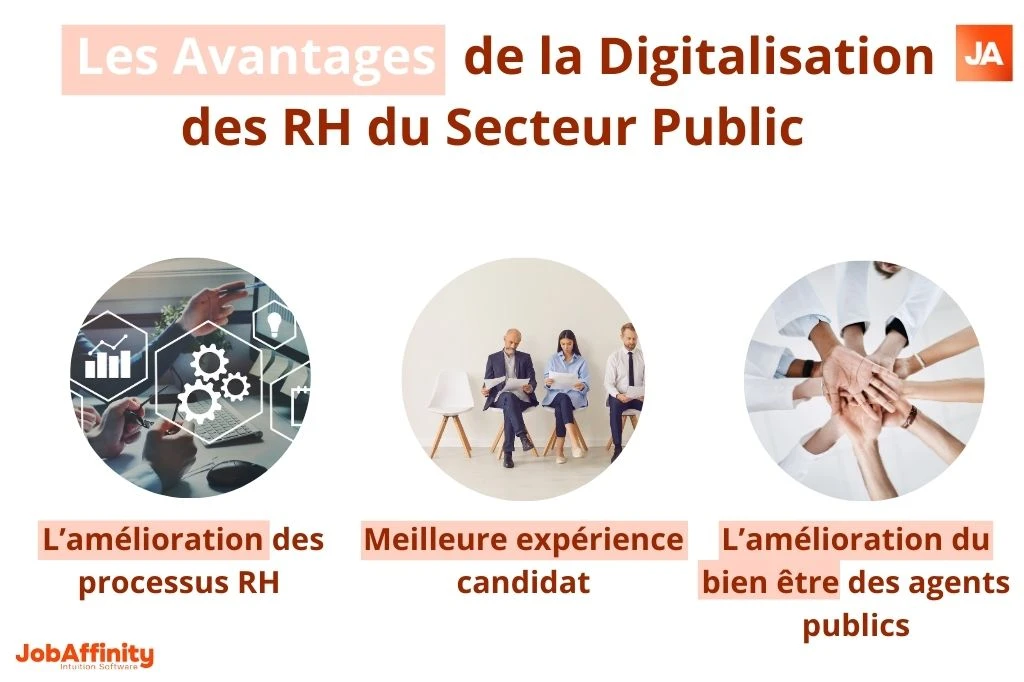
- Optimizing internal processes,
- Providing a better candidate experience,
- Improving public employee well-being and user relations.
An Opportunity to Optimize HR Processes
HR digitalization represents a great opportunity for local authorities, as digital is seen as a performance lever. Indeed, it improves data management, facilitates decision-making, automates processes (payroll, leave, working time, etc.), and promotes collaborative and remote work. For local authorities, this means automating repetitive tasks, saving time on administrative management, and making information more easily accessible.
Result: HR teams can focus on what really matters—supporting employees, developing skills, and managing workforce planning.
A Better Candidate Experience
Thanks to digitalization, application journeys are simpler, faster, and more transparent. Candidates can apply online, track their application status, and receive more responsive answers. Good recruitment communication, combined with effective digital tools, helps structure messages, enhance job offers, and reach the right profiles at the right time.
HR monitoring also becomes more efficient, as teams can track headcount in real-time, visualize upcoming departures, plan mobility, or identify recruitment or training needs.
Improving Public Employee Well-being
Digital tools bring more autonomy and daily comfort to public employees. They provide simplified access to personal information (leave rights, payslips, employee files), more direct interaction with HR services, and better visibility of their career path.
Digitalization also encourages collaborative work, with shared platforms and new communication methods like instant messaging or online project spaces. For example, the Principality of Monaco Government has deployed Microsoft Teams as part of a digital transformation strategy. This initiative also included change management support, with training provided to employees to facilitate adoption of these new digital tools.
What Tools Serve as Levers for HR Digitalization?
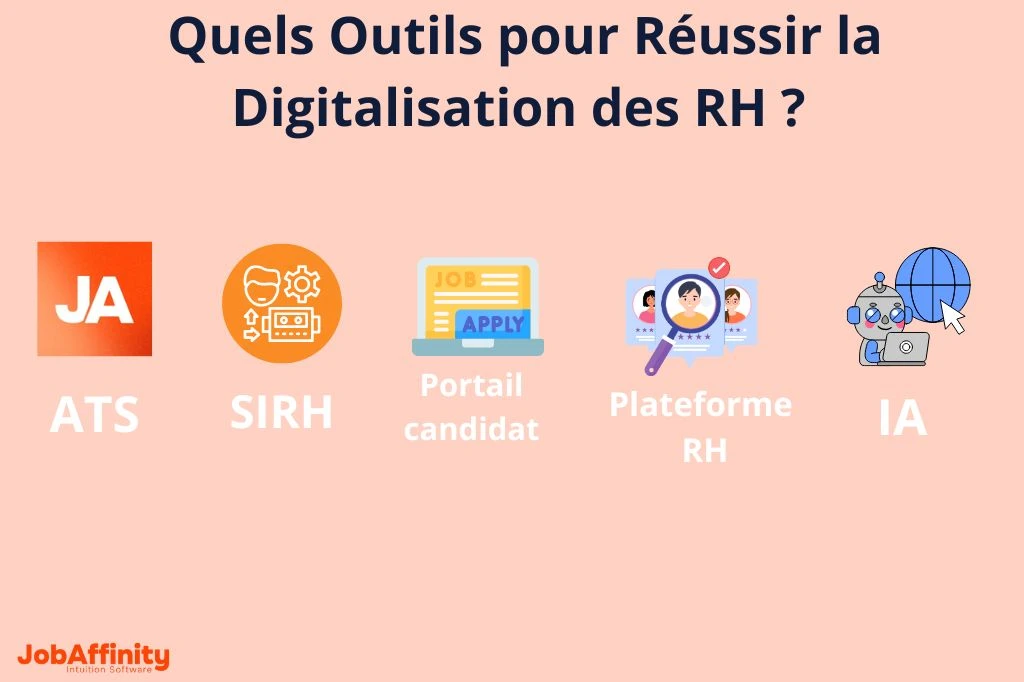
To effectively digitalize HR in the public sector, specific tools adapted to modernization and human resources management are needed:
- ATS, or recruitment software,
- HRIS,
- Candidate portals,
- HR platforms,
- Artificial intelligence.
ATS (Applicant Tracking Systems)
ATS are application management software that manage the entire recruitment process: posting job offers, receiving CVs, automated sorting, scheduling interviews, and tracking applications.
For public recruiters, an ATS like JobAffinity helps lighten the administrative burden related to competitive exams or recruitment campaigns, while ensuring transparency, traceability, and fairness in application processing. They also help build a candidate pool of qualified profiles that can be easily mobilized during future recruitment campaigns.
HRIS (Human Resource Information Systems)
HRIS centralize all aspects of HR management: career, payroll, working time, training, absences, evaluation, etc. In the public sector, they must be compatible with status specificities (mobility, tenure, collective management) and offer high data security.
Candidate Portals
A dedicated candidate portal helps publish job offers in a centralized and accessible way and ensures a clear, smooth, and effective application journey. A good candidate portal contributes to strengthening public service attractiveness by meeting today's expected user experience standards.
Collaborative HR Platforms
HR platforms allow employees, managers, and HR departments to interact more easily: training requests, absence validation, file updates, exchanges about objectives or mobility, etc. For example, Kelio software, used by several local authorities and administrations, offers employees:
- Online access to their personal information,
- The ability to submit leave or training requests,
- Easier remote work management,
- Real-time validation of these requests.
Very practical, these platforms promote transparency, responsiveness, and autonomy, while facilitating remote work and cross-functionality between teams.
Artificial Intelligence
AI is gradually entering public sector HR tools. Serving local authorities, it can:
- Analyze CVs to offer initial sorting,
- Suggest relevant profiles based on a position to fill,
- Anticipate departures or future needs through predictive analysis,
- Personalize the candidate experience on a portal.
Used properly, artificial intelligence doesn't replace humans but supports HR decision-making, especially in processing large volumes of data.
How to Successfully Digitalize HR Processes?
Successfully digitalizing HR processes in local authorities and the public sector requires involving HR teams from the start to build a solution aligned with their needs and daily realities.
It's also very important to choose recruitment tools compatible with public sector specificities: regulatory compliance, interoperability, and data security. Appropriate training must accompany digitalization to ensure effective adoption and limit resistance to change from public employees.
Similarly, project success relies on a clear roadmap that:
- Defines objectives to achieve (administrative time savings, improved user experience, better management),
- Defines deployment stages of the solution (employee training, for example),
- Defines tools to mobilize (ATS, HRIS, HR platforms).
Additionally, internal communication between HR departments, managers, and employees is very important to properly explain changes, anticipate needs, and ensure project buy-in.
Finally, partnering with JobAffinity and its ATS helps effectively support local authorities in their digital transition by:
- Adapting existing processes,
- Training teams,
- Ensuring post-deployment follow-up.
HR digitalization is a powerful lever for modernizing recruitment in local authorities and the public sector, improving the candidate experience, and strengthening team efficiency. By structuring your processes with the right tools, you save time, reduce errors, and enhance your employer image.
At JobAffinity, we support public sector players in this transition with recruitment software designed for local authorities and public administrations.