10 Signs Your Company Needs an ATS
Recruitment taking too long, scattered data, poor communication... Discover the 10 signs it's time to adopt an ATS to simplify your processes and attract the best talents.

Recognizing the signs that it's time to adopt an ATS (Applicant Tracking System) is key to recruiting faster, reducing errors, and improving candidate experience. Time-consuming manual recruitment processes, numerous unqualified CVs, lost contacts with potential talents—several indicators reveal that recruitment tools, without an ATS, are reaching their limits and no longer suffice for effective hiring.
Haven't you joined the 80% of recruiters in France who adopted an ATS in 2024 (Hellowork study)? JobAffinity presents the 10 most revealing signs that it's time to implement an ATS and optimize your recruitment processes.

A Recruitment Process That Takes Too Long
A recruitment process that takes too long is one of the first warning signs of lacking an ATS tool. Indeed, when publishing an offer, sorting applications, and scheduling interviews take several weeks, the company risks increasing recruitment costs, losing the best profiles, and hiring the wrong candidate for the position.
This leads to other negative consequences:
- Candidate frustration enduring excessively long response times.
- Work overload for HR teams overwhelmed with administrative tasks.
- Employer brand degradation.
What an ATS brings: an ATS accelerates each key process stage:
- Job posting publication happens with one click across multiple platforms.
- Application sorting is automated through precise filters.
- Interview scheduling occurs directly in the tool via synchronized calendars.
According to APEC, the average recruitment process duration in France today is twelve weeks, while 52% of executives expect feedback in less than three weeks and 90% wish to go through maximum three interviews. By streamlining the recruitment process, an ATS enables HR teams to focus on what truly matters: evaluating and selecting the best talents.
Non-Centralized Candidate Data
When candidate information is scattered and not centralized in one place, it becomes difficult to quickly identify the right profiles, find a candidate's history, or collaborate internally.
This results in:
- Time loss searching for information or a profile.
- Risk of errors in application processing.
- Risk of missing a candidate who already applied but wasn't retained or communicated.
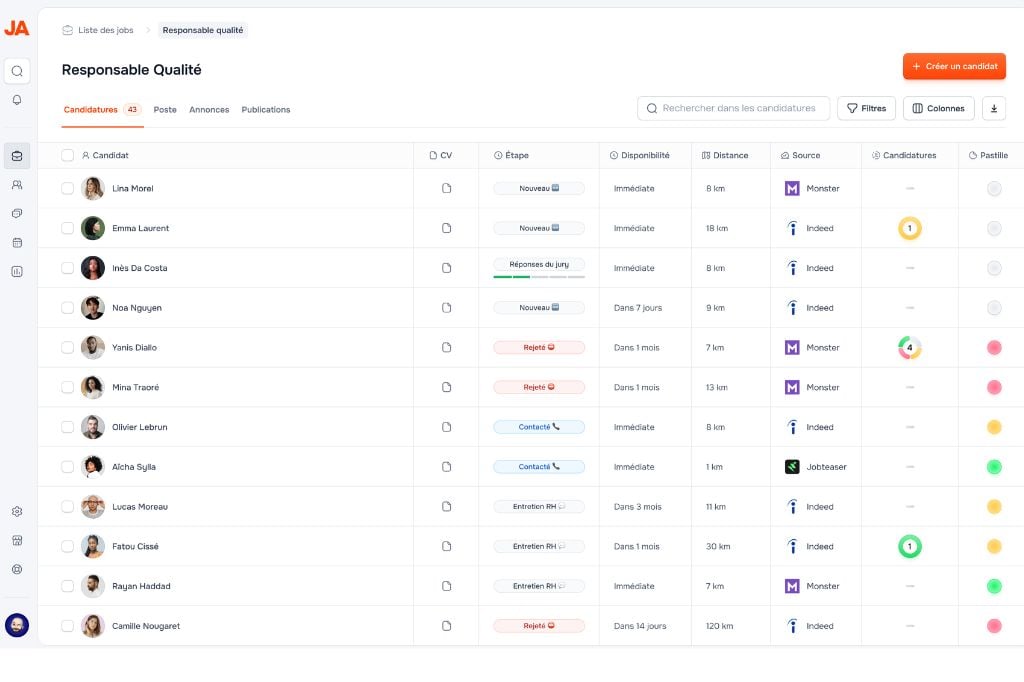
What an ATS brings: an ATS centralizes all data in a single database, accessible to all recruiters and managers. Candidate information (CV, application history, exchanges, evaluations) is gathered in one place and updates happen in real time.
The ATS is also part of key steps in HR digitalization, transforming how teams manage applications and enabling more efficient work without missing opportunities.
Manual and Time-Consuming Job Posting
Distributing a job offer when it must be manually published on different platforms or social networks quickly becomes a very time-consuming task. Indeed, each platform requires specific entry or different formatting, involving tedious manual process.
This leads to several problems:
- Delay in ad distribution.
- Decreased visibility compared to faster competitors.
- Work overload for recruiters.
- Possible data entry errors or oversights.
What an ATS brings: an ATS radically simplifies job offer distribution by writing a single ad that can be automatically published across multiple job boards, social networks, or the company's career site. This one-click multi-channel distribution allows recruiters to focus on application tracking rather than repetitive publication management.

Duplicate Applications
Receiving the same CV multiple times for one position is a situation recruiters know well when received applications aren't centralized. The same candidate can apply through different channels (career site, job board, cooptation), and without proper tool, each application is treated as new.
These duplicates have important impacts on the recruitment process:
- Administrative overload.
- Risk of evaluation errors.
- Lack of visibility on candidate history.
- Decreased efficiency.
What an ATS brings: an ATS automatically detects duplicates and groups all candidate information on a single profile. Whether they apply once or ten times, the recruiter maintains a clear view of their journey and interactions with the company. This consolidation enables more effective candidate progression tracking.
Interview Scheduling Problems
When no scheduling tool is available, interview scheduling can quickly become complex. Coordinating candidate, recruiter, and manager availability can take time and multiply error risks: duplicate slots, oversights, or last-minute postponements.
These obstacles deteriorate the recruitment process, but especially candidate experience, and ultimately harm the company's image.
What an ATS brings: an ATS offers integrated scheduling tools synchronized with team calendars. Candidates can directly select an available slot, while the system automatically handles confirmations, reminders, and updates. This automation reduces errors, accelerates coordination, and ensures smoother interview process flow.
Inefficient Selection Processes
When a selection process is too long or poorly organized, it loses efficiency. Response delays accumulate, coordination between stakeholders deteriorates, interviews become poorly managed, and ultimately, the risk of hiring the wrong person increases.
This results in:
- Demotivating the best profiles who will look elsewhere.
- HR team inefficiency losing themselves in repetitive tasks or useless exchanges.
- Overall company perception deterioration.
- Bad decisions and bad hires that can cost the company dearly.
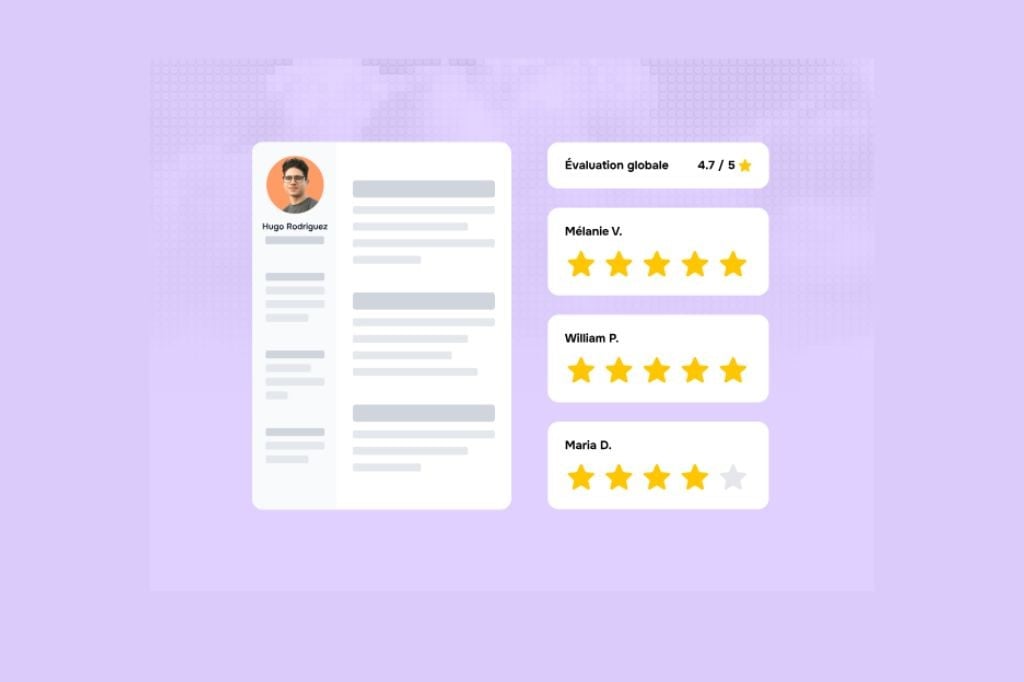
What an ATS brings: an ATS structures and automates each candidate selection stage. It defines objective criteria, centralizes evaluations from different stakeholders, and automates follow-ups. Stages are thus more fluid, better tracked, and aligned with actual position needs. This organization improves decision speed, ensures more transparency, and increases chances of attracting and retaining the best talents.
Recruitment process optimization through an ATS can reduce hiring cycle duration by 60%, according to a LinkedIn study.
Poor Candidate-Recruiter Communication
Recruitment communication plays a central role in candidate experience. When ineffective (no acknowledgment receipt, delayed responses, lack of information on upcoming stages), candidates risk remaining with a poor company image they can spread to other candidates.
Consequences are direct for the company:
- Affected employer image.
- Higher disengagement rate.
- Talent loss.
- Complicated internal coordination.
What an ATS brings: an ATS automates and personalizes exchanges throughout the candidate journey. Acknowledgments are sent instantly, interview reminders activate automatically, and personalized messages can be programmed at each stage. This continuous communication strengthens trust relationship with candidates and facilitates internal collaboration between different recruitment stakeholders.
Lack of Analysis and Tracking
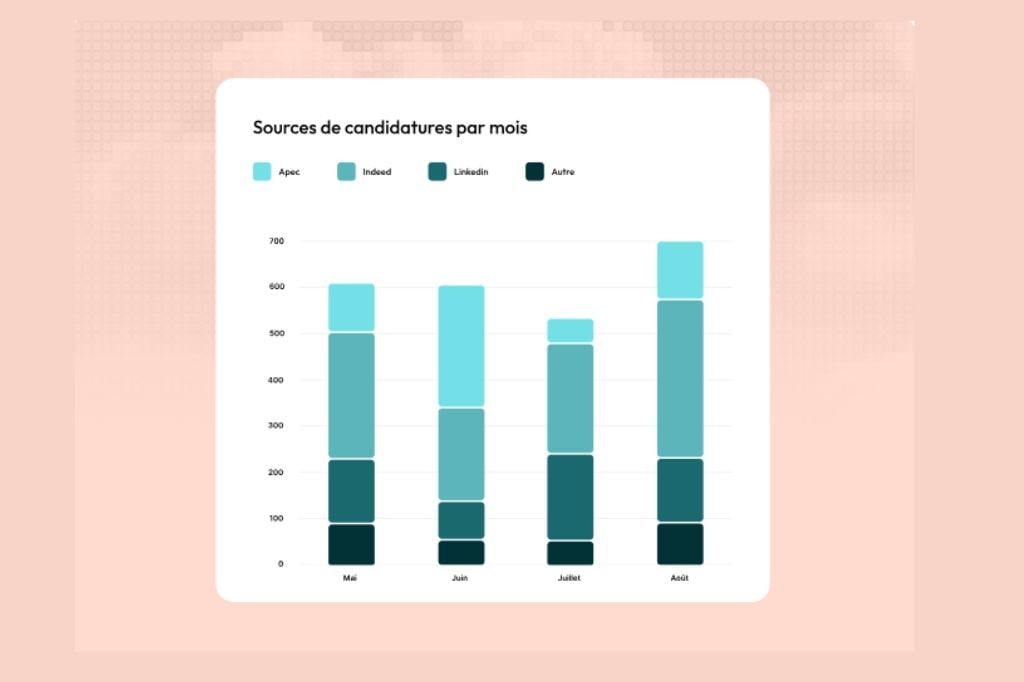
Without appropriate tools, it's difficult to measure recruitment action effectiveness. Essential data from applications, conversion rate, average recruitment duration, or cost per hire are hard to evaluate.
This lack of analysis leads to several consequences:
- Decisions based on impressions rather than facts, limiting process optimization capacity.
- The company doesn't know which channels are most effective, how long recruitment actually takes, nor where bottlenecks are to optimize their processes.
- This generates poorly directed spending and competitiveness loss against competitors capable of adjusting their actions in real time.
What an ATS brings: an ATS provides comprehensive dashboards and indicators to manage recruitment. Data is centralized and presented clearly and numerically. Thanks to this visibility, decisions become more strategic, and processes can be continuously improved based on feedback.
An ATS even enables anticipating needs through predictive recruitment, relying on reliable data to project future hires.
A Talent Pool That Isn't Developing
A talent pool refers to the candidate base already identified by the company (former applicants, profiles met at fairs, spontaneous applications) enabling quick access to qualified profiles as soon as a position opens.
When poorly managed, the company must start from scratch with each recruitment, without capitalizing on past applications. This lack of candidate pool management and development wastes time, opportunities, and candidate loyalty.
What an ATS brings: an ATS enables building, organizing, and developing an active talent pool. Profiles are centralized, classified by skills, experience, or availability, and can be reactivated through targeted communication campaigns. This proactive management facilitates rapid identification of relevant candidates as soon as a position opens.
Decreased Productivity and Increased Turnover
When HR teams spend more time on administrative tasks than recruitment, overall productivity is impacted. Manual application processing, email exchange management, or lack of centralization waste enormous time without adding value.
This poor efficiency impacts the organization because:
- Positions remain vacant longer, overloading existing teams and increasing their stress.
- Poor interview and selection management promotes turnover.
- HR, overloaded with administrative tasks, are less available for employees.
- Work climate deteriorates, as teams lack resources and endure prolonged delays before seeing reinforcements arrive.
What an ATS brings: an ATS automates time-consuming** tasks and refocuses recruiters on their core mission**: identifying, evaluating, and retaining talents. Thanks to better operational efficiency, recruitment timelines decrease, positions are filled faster, and team workload is lightened. The company thus gains productivity and limits turnover by offering more stable and better-organized working conditions.
Overly long processes, non-centralized data, insufficient communication—identifying signs indicating your current tools are reaching their limits will allow you to take the leap and simplify your task by choosing an ATS for your recruitment.
Choose JobAffinity ATS to Simplify Your Recruitment
At JobAffinity, we're convinced that an ATS must be designed by recruiters for recruiters. Our mission is clear: make recruitment more efficient, more collaborative, and more human. Our recruitment software simplifies your administrative tasks, supports your HR teams daily, giving them means to attract, evaluate, and retain the best talents.
With JobAffinity, your recruitment process becomes better, thanks to:
- One-click job offer distribution.
- Application centralization.
- Better collaboration with your team.
- Building candidate pools.
- Statistics tracking to always optimize recruitment.
Want to discover how JobAffinity can transform your recruitment processes? Our teams are at your disposal to support you and present a solution designed for performance.
FAQ
Is an ATS suitable for small structures or only large groups?
Often modular and offered at accessible rates, ATS suit SMEs as well as mid-sized and large companies. You can start with basic features and add other options as your company grows.
How long does it take to deploy an ATS?
With JobAffinity, your ATS deployment is very quick: simple setup is operational within 2-3 days. This includes basic configuration: creating recruiter space, adding users, offer templates, first published offers, and application centralization.
However, if you want complete integration: connection to job boards, career site, internal tracking and reporting tools, it generally takes several days**, depending on your needs and team availability.
Which indicators to track to evaluate ATS impact?
To measure ATS impact, you can track several key performance indicators (KPI):
- Time-to-hire: time between candidate application and hiring. It measures selection process speed and efficiency.
- Time-to-fill: necessary time between position opening and start date. It evaluates company ability to quickly fill its resource needs.
- Application conversion rate: proportion of candidates moving from one stage to another. This indicator shows process effectiveness in selecting right profiles.
- Candidate engagement and satisfaction: through surveys or direct feedback, this indicator measures candidate experience and associated employer image.


